
Wine cellar cooling / Fort Worth / Ducted replacement
Fort Worth, Texas / Before & after
Ducted Wine Cellar Cooling
Replacement in Fort Worth.
An attic-mounted evaporator. A separate outdoor condensing unit. See how Vivid Air DFW replaced the refrigeration equipment serving an existing Fort Worth wine cellar, with before-and-after photographs of both sides of the system.
Fort Worth, Texas · June 2026 · Ducted split system · LRC HS47EC evaporator · Outdoor Copeland condensing unit
A new cooling system for an existing Fort Worth wine cellar
Vivid Air DFW completed this ducted wine cellar cooling project in June 2026. The existing installation had an air handler in the attic and separate refrigeration equipment outdoors. The replacement retained that general arrangement, with a new LRC HS47EC remote evaporator and a Copeland condensing unit serving the wine room.
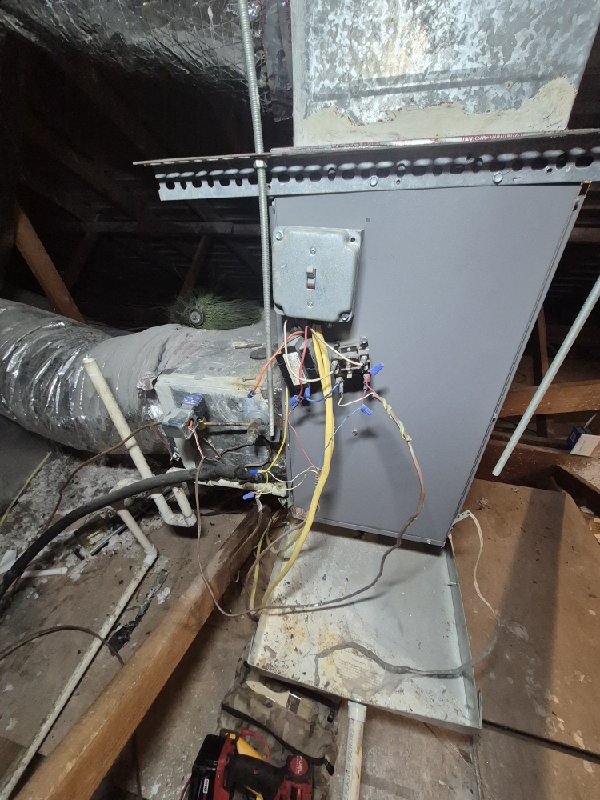
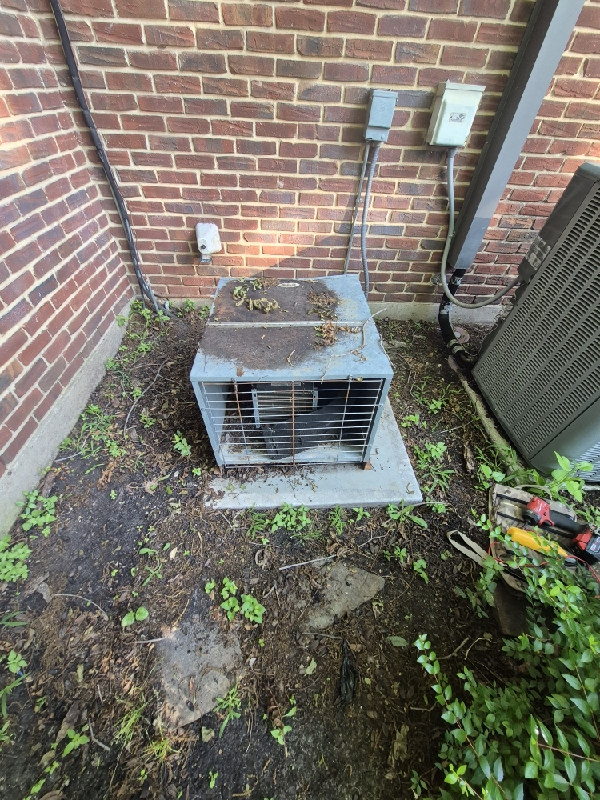
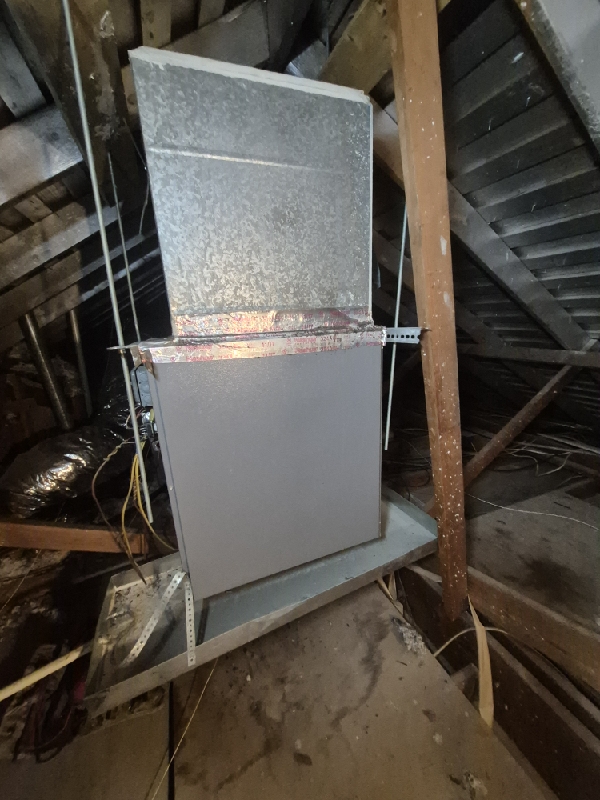
The before photographs show the previous equipment in its actual surroundings, including the attic cabinet and drain pan, and the outdoor condenser beside the brick wall. The after photographs show the replacement assemblies, refrigerant connections and drainage arrangement. This is a mechanical-system project; the photographs document the equipment serving the cellar rather than a renovation of the bottle racks or room finishes.
The job record lists an LRC HS47EC evaporator, a Copeland M7ZHH046IAA177 condensing unit, a dual pressure control and an outdoor equipment cover. These components were part of the project package. The equipment names identify what was supplied for this installation; another wine room needs its own evaluation before a replacement package is selected.
Before: the attic and outdoor equipment
A ducted wine cellar installation has several connected parts, and both ends deserve attention during a replacement evaluation. The attic air handler moves air through the wine room’s duct system. Outdoors, the condensing unit is connected to it by refrigerant piping. Replacing one component without considering the other equipment, controls and connections can leave important questions unanswered.
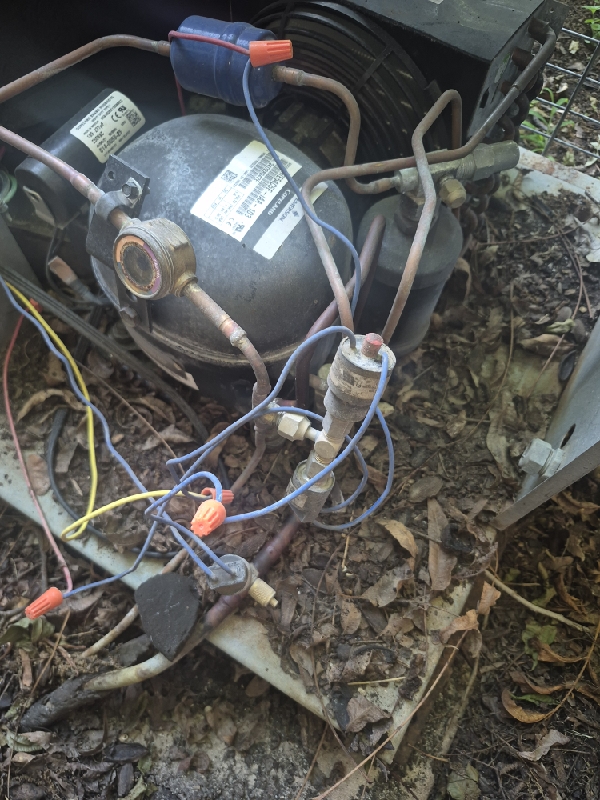
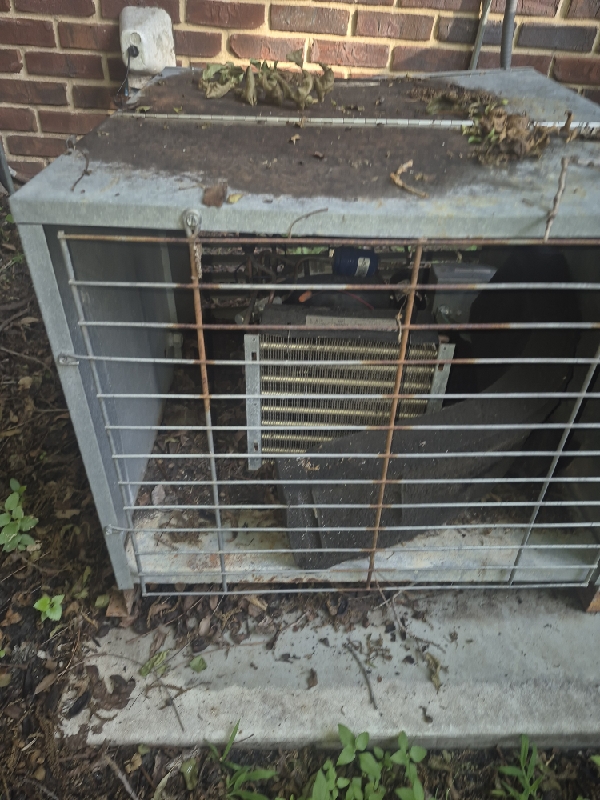
The existing outdoor equipment is visibly weathered in the before photographs, with leaves around the cabinet. These images record its condition at the time of the work. They do not, by themselves, establish a particular failed part or the original cause of a cooling complaint.
After: attic-mounted evaporator and drainage
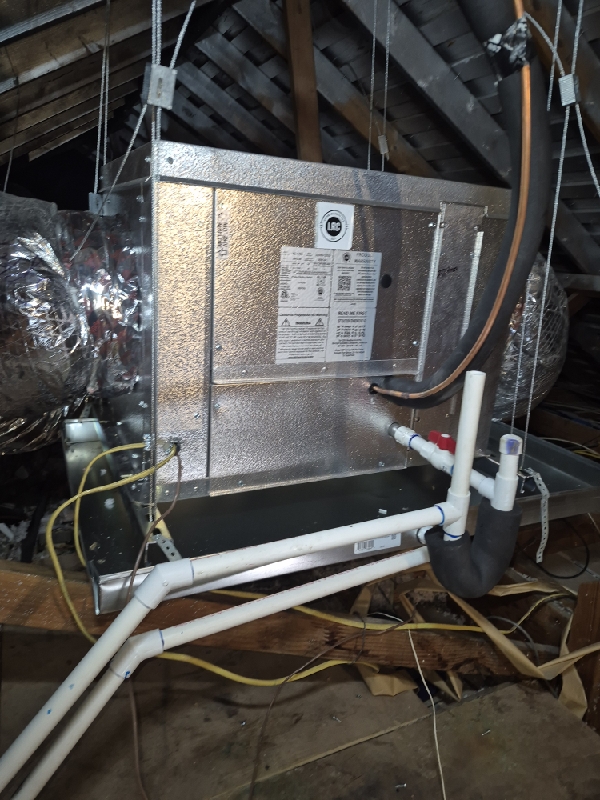
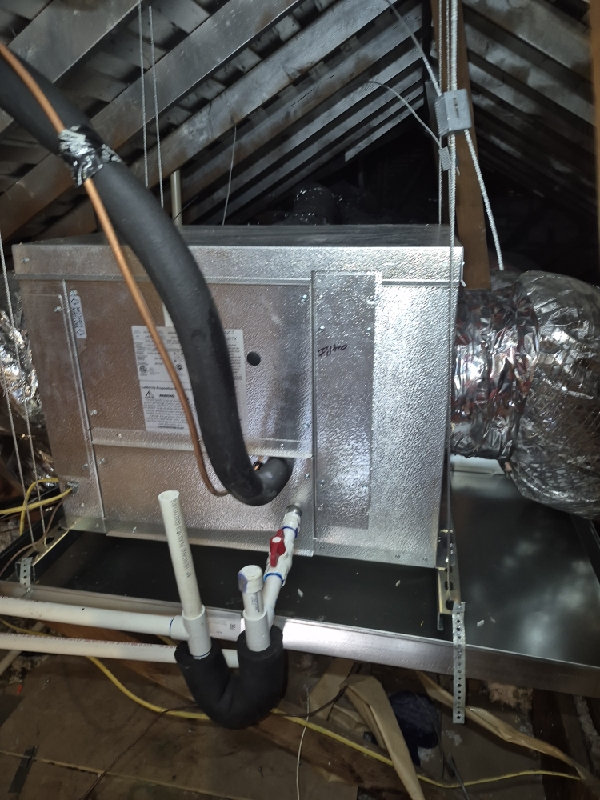
The new LRC evaporator is suspended in the attic above a secondary drain pan. The finished-equipment photographs show the duct connections, insulated suction piping and PVC condensate connections. Together, these views make the installation layout easier to understand than a model-number list alone.
With a ducted system, the evaporator can remain outside the wine room while connected ducts carry air between the equipment and the cellar. That layout keeps the large equipment cabinet out of the bottle-storage area. It also makes the attic location, duct route, service access and condensate drainage part of the installation plan.
Condensate needs a dependable route away from the evaporator. The photographs show the drain piping and secondary pan as separate parts of that arrangement. When planning similar work, we consider where water will travel, how the piping can be accessed and how the equipment can be serviced after installation.
After: covered outdoor condensing unit
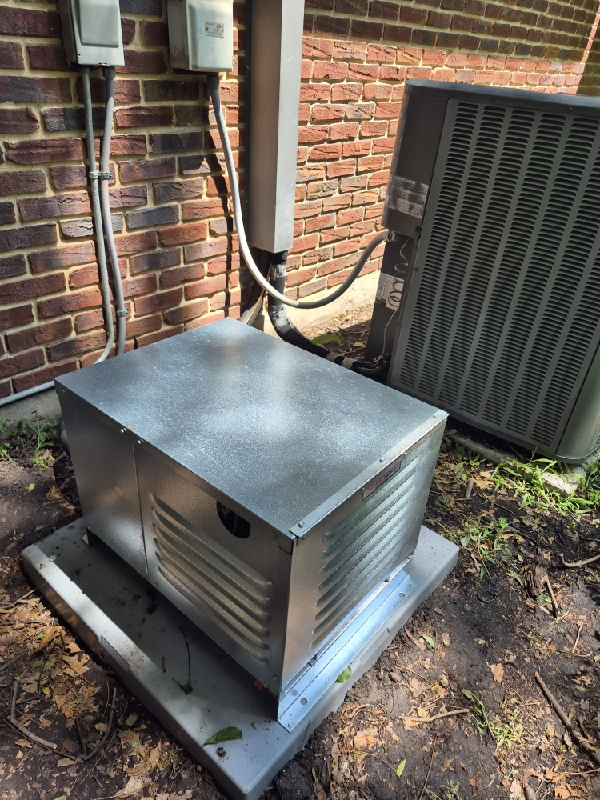
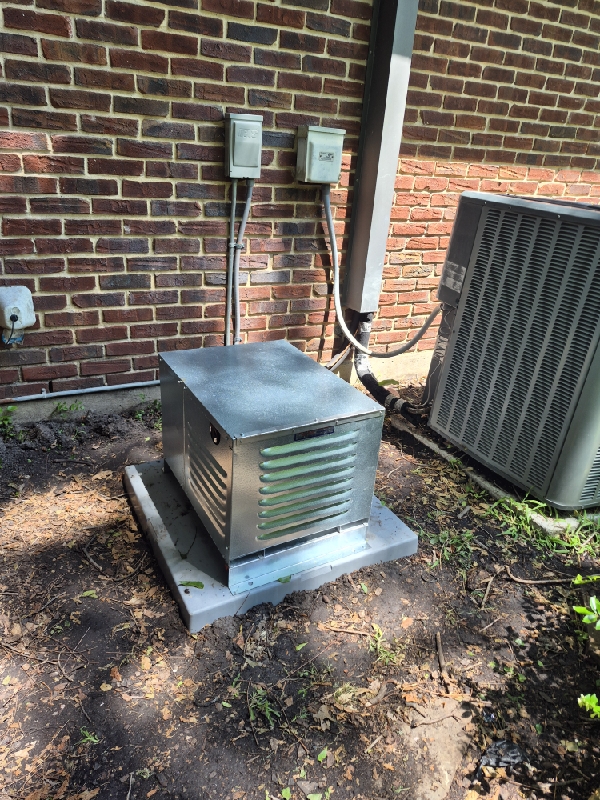
The outdoor photograph shows the replacement condensing equipment beneath a metal cover on its base, next to the home’s other air-conditioning equipment. This is the outdoor portion of the dedicated wine cellar system. It is connected to the attic evaporator through refrigeration piping, rather than sharing the home’s central air-conditioning circuit.
The project package included new refrigerant piping and a cover for the condensing unit. Outdoor placement needs to account for the equipment’s airflow and maintenance requirements. An enclosure is one part of the installation; it does not eliminate the need to keep the surrounding area accessible and follow the equipment’s clearance requirements.
A closer look at the equipment we replaced
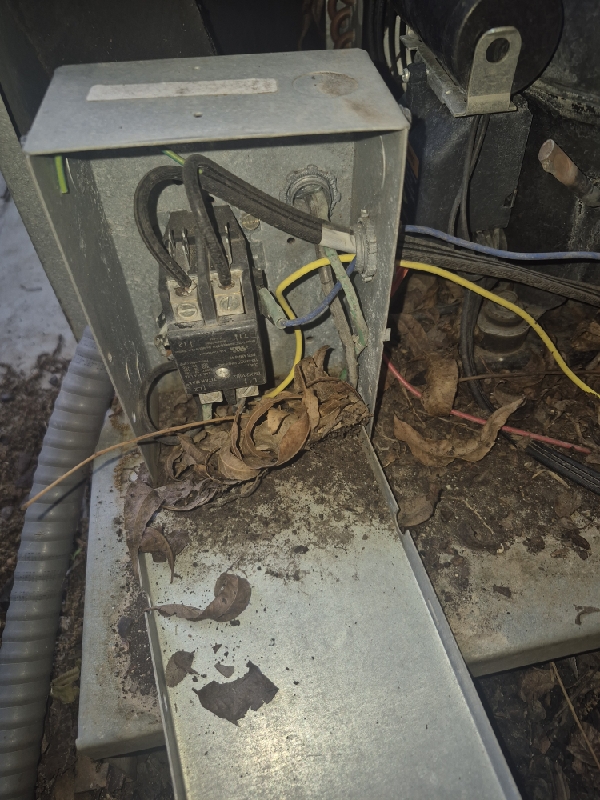
The additional before photographs show details that are easy to miss in an overall equipment picture. One view follows the old attic cabinet up to its duct connection. Another shows the wiring and refrigerant connections at the side of that unit. Outside, the open equipment view shows the compressor and surrounding refrigeration components.
These views help explain why the estimate for a wine cellar replacement needs to cover the installation around the equipment as well as the equipment itself. The work can involve access, support, piping, ducts, drainage and controls in different parts of the property. A single photograph of the condenser does not show the full scope.
Installation scope and recorded completion
The installation scope covered the attic air handler, matching condensing equipment, refrigerant line set, supply and return duct connections, condensate piping and controls. It also called for brazing the refrigeration connections, pressure testing, evacuation, charging and startup checks of airflow, compressor operation and temperature controls.
The completion record confirms that the installation was complete and the system was functioning. The finished-equipment photographs show how the attic evaporator, outdoor condensing unit, piping and drainage fit together in this Fort Worth installation.
A cooling system also depends on the room it serves. Insulation, door sealing, glass and moisture entering the cellar affect operating conditions. For a different project, those details should be reviewed alongside the equipment and duct layout rather than assuming the same equipment will suit every wine room.
Questions about a ducted wine cellar replacement
How does this ducted wine cellar system work?
The attic evaporator and outdoor condensing unit are linked by refrigerant piping. Ductwork carries air between the wine room and the evaporator. The evaporator removes heat from the room’s circulating air, and the outdoor equipment rejects that heat. The controls operate the dedicated system according to the wine room’s temperature needs.
Why put the evaporator in the attic?
An attic location can keep the evaporator cabinet outside the wine room, leaving the room’s interior available for storage and finishes. It requires a suitable duct route, drainage, equipment support and access for maintenance. This Fort Worth project already had an attic equipment arrangement; the replacement continued that general layout.
Is the small covered outdoor unit the home’s air conditioner?
No. In these project photos, the small covered unit is the wine cellar condensing equipment. The larger unit beside it serves a different system. Keeping the wine cellar equipment identifiable helps homeowners provide the right model numbers and photographs when arranging service.
Can the same equipment be used for another wine cellar?
Equipment selection depends on the individual room and installation. Room size, glass, insulation, doors, surrounding conditions and duct layout all affect the evaluation. The LRC and Copeland equipment listed here describes this project, rather than a standard package for every cellar.
What should I send when asking about a replacement?
Send overall photographs of the evaporator and condensing unit, close-ups of readable model labels, and a description of the problem. If possible, include photographs of accessible ducts and drains. Tell us the room’s current temperature and whether the problem is continuous or comes and goes. We can then discuss an appropriate visit or estimate.
Does new cooling equipment guarantee a particular humidity level?
No single equipment replacement guarantees a specific room humidity. Moisture entering the room, its construction and air leakage influence humidity along with the cooling system. Those conditions need to be considered when evaluating a wine cellar, especially if condensation or moisture is part of the complaint.
Discuss your Fort Worth wine cellar project
If your existing wine cellar equipment needs attention, start with photographs of the attic or indoor unit, the separate condensing unit and any readable model labels. Include the current room temperature and a brief description of what has changed. We can use those details to prepare for a service visit or discuss a replacement estimate.
Explore our DFW wine cellar cooling services, see another Fort Worth split-system replacement, or compare the Dallas ducted replacement project. Manufacturer resources: LRC wine-room evaporators and Copeland condensing units.
For an installation or replacement estimate, call (682) 267-7061. Vivid Air DFW focuses on dedicated split-system wine cellar cooling.
Vivid Air DFW · Aledo, Texas · Serving Fort Worth · Texas license TACLA36669C